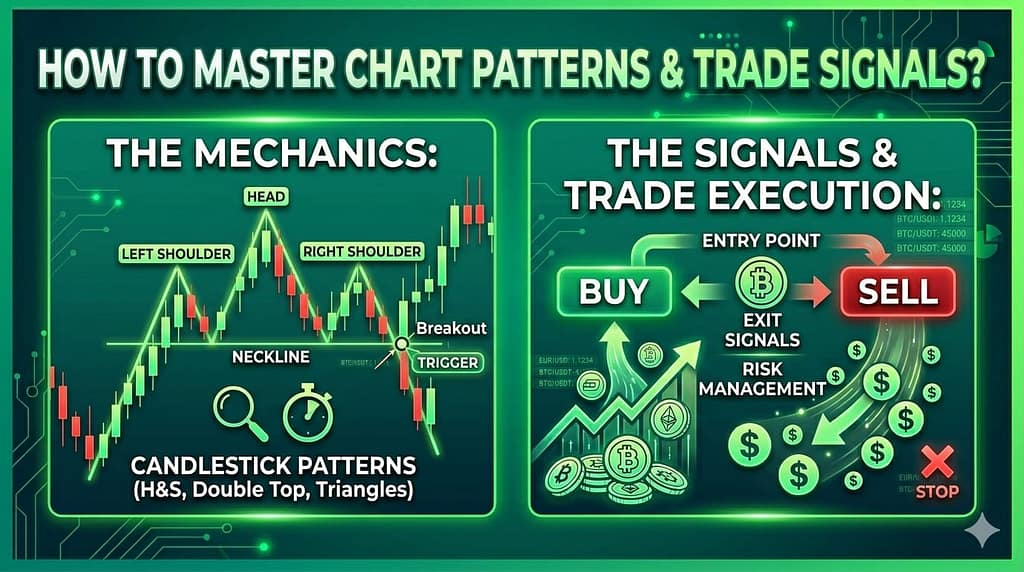
How to Master Chart Patterns and Trade Signals
Every successful trader understands one important fact: price action leaves clues. These clues appear in the form of chart patterns and trading signals that help traders identify potential opportunities in the market. Whether you are trading stocks, forex, or cryptocurrencies, learning how to read charts correctly can dramatically improve your decision-making process.
Many beginners jump into trades without understanding what the market is actually communicating. Professional traders, on the other hand, spend significant time analyzing chart structures, support and resistance levels, trend formations, and confirmation signals before executing a trade.
About This Educational Resource
This educational resource is shared to help students, teachers, and language learners improve their reading habits, knowledge, vocabulary, and learning skills. Educational books play an important role in personal growth, academic success, and self-learning development.
Benefits of Reading This Book
Reading educational books can improve communication skills, increase understanding, support critical thinking, and help learners discover new ideas and concepts in an easy and effective way.
Why Should You Read This Book?
This book can be useful for students, beginners, teachers, and readers who want to improve their educational knowledge and develop better learning abilities through regular reading and practice.
What Are Chart Patterns?
Chart patterns are visual formations created by price movements on a trading chart. These formations often repeat because market psychology tends to repeat itself. Fear, greed, optimism, and uncertainty influence how buyers and sellers behave, creating recognizable patterns over time.
When traders learn to identify these patterns, they can better predict possible future price movements and improve the accuracy of their trading decisions.
The Mechanics Behind Chart Patterns
Chart patterns are not magic formulas. They represent the ongoing battle between buyers and sellers. Every candlestick reflects decisions made by market participants.
When buyers become stronger than sellers, prices rise. When sellers gain control, prices fall. Chart patterns emerge as these forces interact and create recognizable structures.
Popular Bullish Patterns
- Ascending Triangle
- Cup and Handle
- Double Bottom
- Bull Flag
- Inverse Head and Shoulders
Popular Bearish Patterns
- Descending Triangle
- Double Top
- Bear Flag
- Head and Shoulders
- Rising Wedge
Understanding Trade Signals
A trade signal is an indication that suggests a potential buying or selling opportunity. Signals can come from chart patterns, indicators, volume analysis, or market structure.
Strong traders never rely on a single signal. Instead, they seek confirmation from multiple sources before entering a trade.
Common Buy Signals
- Bullish breakout above resistance
- Strong increase in trading volume
- Bullish candlestick confirmation
- Higher highs and higher lows
- Moving average crossover
Common Sell Signals
- Breakdown below support
- Bearish candlestick formations
- Lower highs and lower lows
- High selling volume
- Trend reversal confirmation
Trade Execution Strategies
Finding a signal is only half of the trading process. Proper execution determines whether a trader can effectively manage risk and maximize reward.
Step 1: Identify the Setup
Wait for a valid chart pattern to form completely before considering a trade.
Step 2: Wait for Confirmation
Avoid entering trades based on assumptions. Let the market confirm the breakout or breakdown.
Step 3: Set a Stop Loss
Risk management is essential. Always define your maximum acceptable loss before entering a position.
Step 4: Define Profit Targets
Successful traders know their exit strategy before entering a trade.
Risk Management Principles
- Never risk more than a small percentage of your account on one trade.
- Use stop-loss orders consistently.
- Avoid emotional decision-making.
- Focus on long-term consistency.
- Keep a detailed trading journal.
Common Mistakes Traders Make
- Overtrading
- Ignoring stop losses
- Trading without a plan
- Following emotions instead of strategy
- Entering trades too early
- Ignoring market context
Frequently Asked Questions
Are chart patterns reliable?
Chart patterns can be effective when combined with proper risk management and confirmation signals.
Can beginners learn chart patterns?
Yes. With practice and consistent study, beginners can become proficient at identifying patterns and signals.
Do chart patterns work in crypto, forex, and stocks?
Most major chart patterns can be applied across different financial markets.
Final Thoughts
Mastering chart patterns and trade signals takes time, patience, and practice. The most successful traders focus on understanding market behavior rather than searching for shortcuts. By learning how patterns form, recognizing quality signals, and executing trades with discipline, traders can develop a structured approach to navigating financial markets.
📚 Related Books


Join Our Facebook Learning Groups
🇩🇪 Learn German Free 🇬🇧 English Learning Group 🇪🇸 Spanish Learning GroupJoin our educational Facebook communities to improve your language skills, practice daily conversations, and connect with learners from around the world.