A Quick Dive into “Before, Between and After”
I stumbled across this little workbook, Before, Between and After, while I was looking for some supplemental material to help with early number recognition. You know how it is—sometimes you have a stack of complex educational theories on your desk, and other times, you just need something straightforward, visual, and honestly, just plain functional for practice.
📖 First Impressions
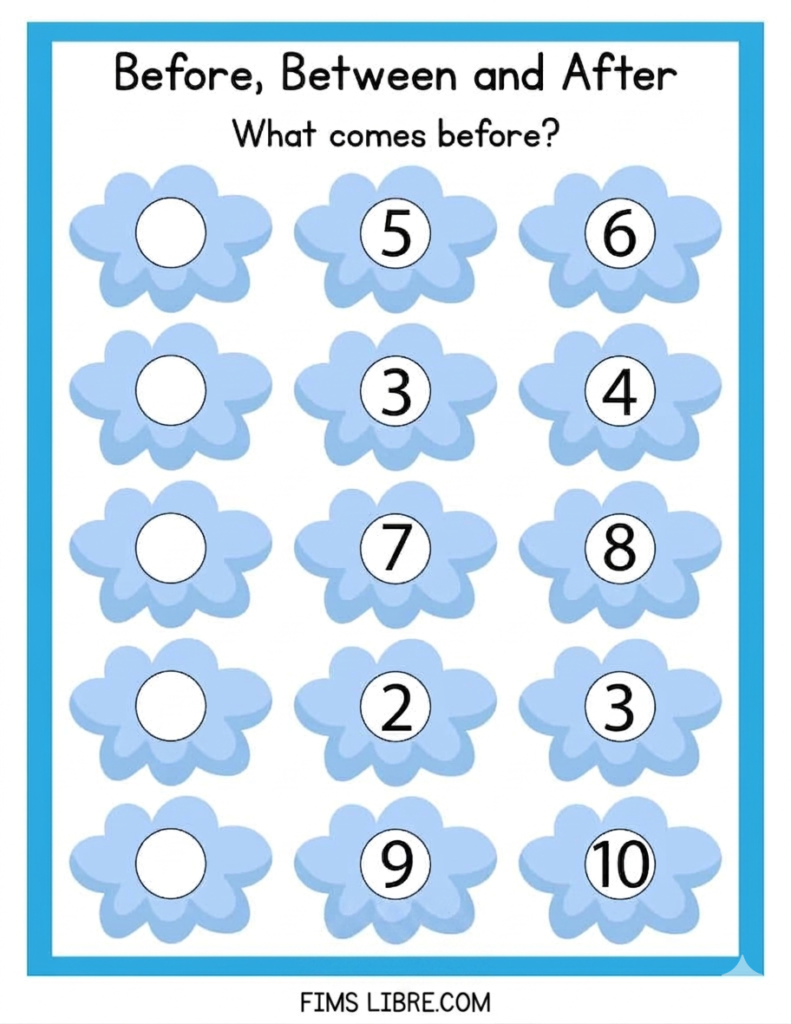
Honestly, I wasn’t expecting much beyond the basics when I opened this. It’s not trying to reinvent the wheel, and I think that’s actually its biggest strength. The design is clean—very clean. If you look at the layout of the pages, like the one shown in Gemini_Generated_Image_jyh60cjyh60cjyh6.png, it’s not cluttered. There aren’t distracting backgrounds or bizarre color palettes that make it impossible to read. It’s just simple, clear, and easy to look at.
📚 What’s This Book Really About?
At its core, this is a drill-based workbook focused on numerical sequence. It’s specifically targeting that bridge between counting and understanding relationships between numbers. It asks the reader—or in this case, the learner—to identify what comes before, after, or, occasionally, between two given numbers. It’s repetitive, sure, but I’ve found that repetition is usually where the “aha!” moment happens for kids.
⭐ Things That Stood Out to Me
Maybe it’s just me, but I really appreciate when a workbook doesn’t try to be “cute” to the point of being unreadable. The use of the flower icons to frame the numbers is simple and pleasant without feeling like it’s trying too hard to be a cartoon.
Here are a few specific things that worked for me:
- Whitespace: The layout has enough room for someone to actually write in the answers without squeezing them into tiny, cramped boxes.
- Progression: It doesn’t jump into the deep end immediately. It keeps the difficulty level fairly consistent so there isn’t that sudden frustration that can cause a child to just shut down.
- Clarity: The typography is crisp. It sounds like a minor detail, but I’ve used other workbooks where the font is so stylistically chosen that the “4” looks like a “9” or the “1” looks like a “7,” which just causes unnecessary confusion.
⚠️ A Couple of Weak Spots
If I’m being realistic, though, it’s not perfect. To be fair, this is a very focused tool. If you are looking for a comprehensive math curriculum, this isn’t it. It doesn’t offer much in the way of conceptual explanations. It’s purely practice. If a student is stuck on the actual *concept* of “before” and “after,” this book won’t teach them. It assumes they already have a foundational grasp and just need to hammer it home with repetition.
Also, at one point, I felt like the lack of variety in the exercises might become a bit monotonous. If you assign too many pages at once, it’s easy for interest to wane. This is definitely better in short, focused bursts rather than long, heavy study sessions.
💭 Some Personal Thoughts
What surprised me most was how much I enjoyed the simplicity. Sometimes, in education, we tend to overcomplicate things. We look for the most innovative game or the most complex digital tool. But there is something to be said for a pencil, a piece of paper, and a clear visual sequence. There’s a quietness to using this that I think is missing from a lot of modern learning environments. I found myself actually looking forward to working through a few pages just because it was so low-stress.
📥 Final Thoughts
Is it worth your time? If you are a parent or a teacher looking for something to build confidence in basic number order, then yes, it’s a solid resource. It’s lightweight, the layout is professional, and it does exactly what it says on the cover—no fluff. Just keep in mind that it’s a tool for practice, not a substitute for teaching. Use it for what it is, and it’s a very helpful little addition to the shelf.
📚 Related Books
Join Our Facebook Learning Groups
🇩🇪 Learn German Free 🇬🇧 English Learning Group 🇪🇸 Spanish Learning GroupJoin our educational Facebook communities to improve your language skills, practice daily conversations, and connect with learners from around the world.